

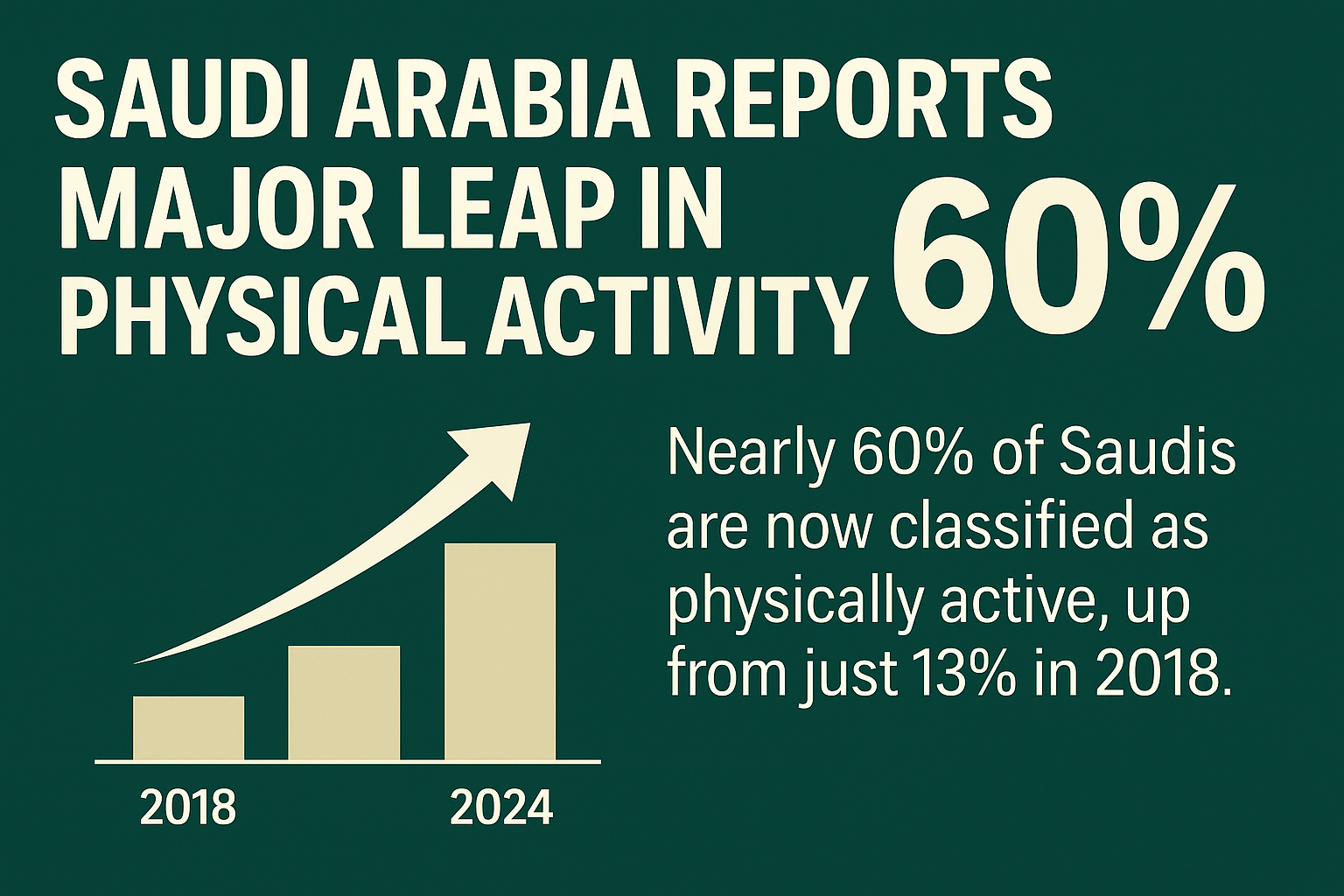
Riyadh — Saudi Arabia has announced a dramatic rise in the nation’s physical activity levels, now reaching nearly 60 % compared with just 13 % in 2018, as the country pushes forward its sports-and-health agenda under its national reform vision. The update came during a panel on “The Impact of Sports on Quality of Life” organised at a health forum in Riyadh.
The increasing participation is attributed in part to a range of community-based initiatives launched by Saudi sports authorities, including open-air fitness zones, mass-participation running events, and expanded access to sport for women and senior citizens.
What This Means
- The sharp rise signals that Saudi Arabia is not just hosting big sports events and building stadiums, but also developing grassroots engagement and public health through sport.
- By getting more residents active, the Kingdom has strengthened its sports ecosystem — helping to build a population that’s healthier, more engaged, and better prepared to support high-level competitions.
- The trend supports broader economic and social goals: healthier citizens mean lower healthcare costs, increased productivity, and a stronger base of participants, fans and volunteers for Saudi-hosted events.
The Strategic Impact
This success suggests that Saudi sports strategy is maturing: rather than relying solely on marquee international competitions, the Kingdom is cultivating the local sport culture — and strengthening foundations for long-term performance, participation and legacy. For the sports industry (clubs, academies, venues) this rising base of active people means growing audiences, membership potentials, and talent pipelines.
Looking Forward
Going forward, key questions will include how participation is sustained (so it doesn’t plateau) and how this active base translates into elite talent and national-level sporting performance. As Saudi Arabia prepares to host more global events, having a strong domestic sport culture will become a critical advantage.