

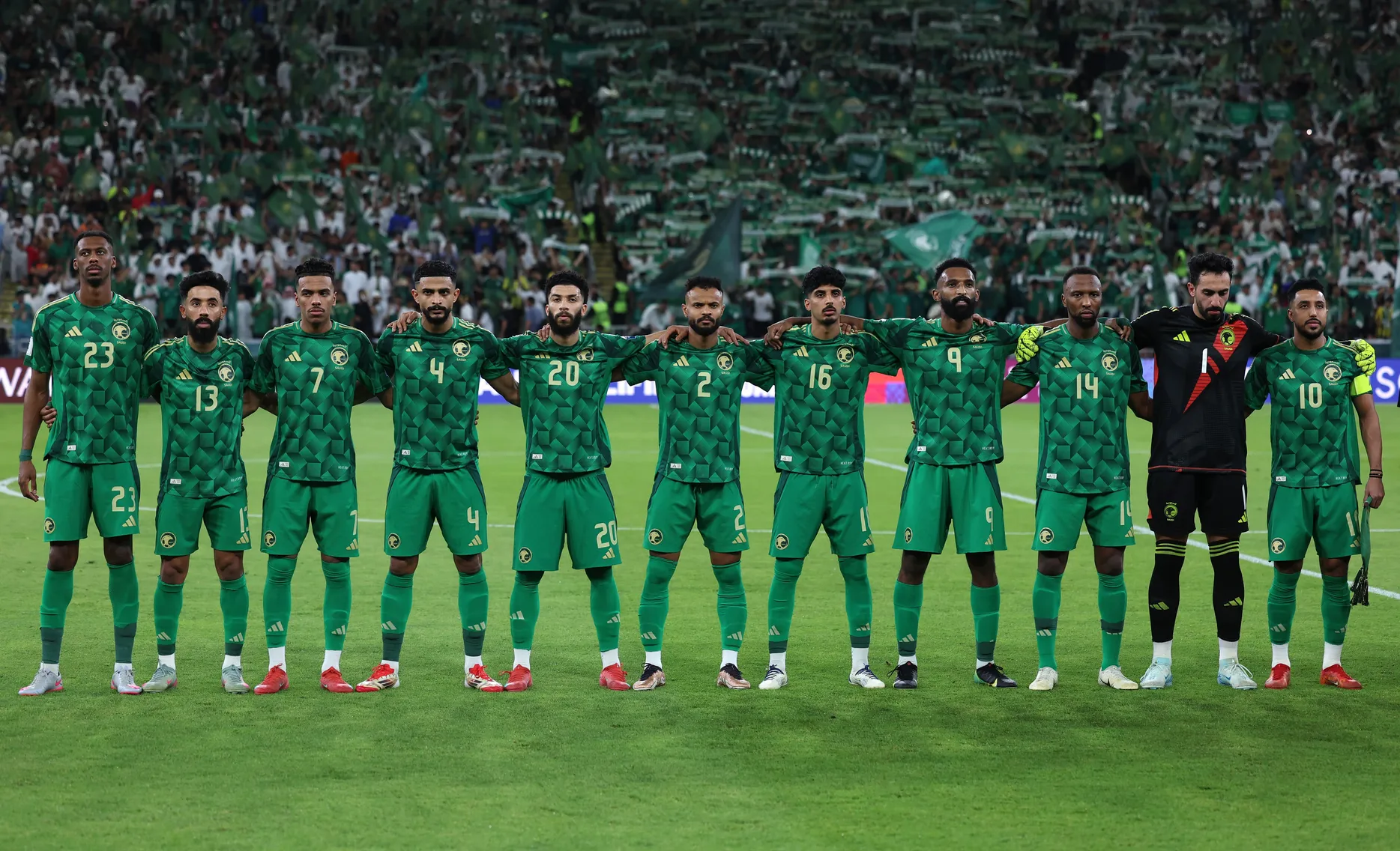
The roar of 80,000 fans in Riyadh’s King Saud Stadium still echoes in the hearts of Saudi football fans. But as the world turns its gaze to the 2026 FIFA World Cup — the first ever hosted by three nations — the Green Falcons are preparing for a historic journey across North America, where destiny, not just draws, will determine their path to glory.
While Saudi Arabia’s sights are firmly locked on hosting the 2034 World Cup — a landmark event that will cement the Kingdom’s status as the undisputed global hub of football — the 2026 tournament presents an unparalleled opportunity: to announce themselves as a true football superpower on the sport’s grandest stage.
So where will the Green Falcons play?
The answer lies in the ambitious, state-of-the-art infrastructure of the United States, Canada, and Mexico — and in the strategic brilliance of Saudi Arabia’s own sporting vision.
The 2026 Host Cities: A Continent of Champions
The 2026 World Cup will be contested across 16 iconic cities:
- United States (11 venues):
New York/New Jersey (MetLife Stadium), Los Angeles (SoFi Stadium), Dallas (AT&T Stadium), Atlanta (Mercedes-Benz Stadium), Boston (Gillette Stadium), Philadelphia (Lincoln Financial Field), Seattle (Lumen Field), San Francisco Bay Area (Levi’s Stadium), Houston (NRG Stadium), Kansas City (Arrowhead Stadium), Miami (Hard Rock Stadium) - Mexico (3 venues):
Mexico City (Estadio Azteca), Guadalajara (Estadio Akron), Monterrey (Estadio BBVA) - *Canada (2 venues):
Toronto (BMO Field), Vancouver (BC Place)
Each stadium is a marvel of modern engineering, but only a select few are destined to host the knockout rounds — including the Final at the legendary MetLife Stadium in East Rutherford, New Jersey.
Where Will the Green Falcons Play? The Strategic Blueprint
Based on FIFA’s seeding, historical performance, and the Kingdom’s own ambition, Saudi Arabia is expected to be placed in Group A, B, or C — meaning their group stage matches will likely unfold in the eastern and central United States, where logistics, fan accessibility, and media exposure are maximized.
Most Probable Group Stage Venues for Saudi Arabia:
🔹 Kansas City (Arrowhead Stadium) – The Perfect Fit
A city known for its electric, passionate crowds and deep football culture, Arrowhead offers a neutral, high-energy environment ideal for a team with a growing global following. The proximity to major US markets and its state-of-the-art facilities make it a top contender.
🔹 Houston (NRG Stadium) – The Gulf Connection
With its massive expat communities and strong Middle Eastern ties, Houston is a natural home for the Green Falcons. The stadium’s retractable roof ensures perfect conditions, and the city’s international airport makes it easy for Saudi fans to travel. It’s the most culturally resonant venue on the list.
🔹 Atlanta (Mercedes-Benz Stadium) – The Showcase Stage
A venue built for spectacle, Atlanta has hosted Super Bowls and Olympic events. FIFA often places high-profile teams here to maximize global broadcast impact. With its stunning architecture and central US location, Atlanta is a prime candidate for Saudi Arabia’s high-stakes group clash.
If Saudi Arabia advances to the Round of 16?
They could find themselves in Dallas (AT&T Stadium) — the most technologically advanced and luxurious venue in the entire tournament. With a capacity of 100,000 and a retractable roof, AT&T Stadium is the unofficial “World Cup Palace.” It’s where legends are made — and where Saudi Arabia, riding the momentum of Ronaldo’s global ambassadorship and the Crown Prince’s Vision 2030, could stun the world.
Quarterfinals or Semifinals?
That’s when the Green Falcons would be destined for Los Angeles (SoFi Stadium) — the glittering jewel of the tournament, home to Hollywood and global icons. A match here wouldn’t just be football. It would be a cultural phenomenon.
The Bigger Picture: Saudi Arabia Isn’t Just Playing — It’s Projecting Power
This isn’t just about wins and losses. It’s about positioning.
Every pass in Kansas City, every goal in Houston, every roar in Atlanta — these moments are broadcast to 5 billion viewers. And each one reinforces the narrative Saudi Arabia has spent years building: that it is not just a host of the future, but a force in the present.
Ronaldo’s White House visit last week wasn’t just about meeting Trump. It was about signaling to the world: Saudi Arabia is now part of the global elite — in sport, in business, in influence.
And as the Green Falcons prepare for 2026, they carry more than just a jersey. They carry the ambition of a nation rewriting its destiny.
The 2034 World Cup may be the crown jewel — but the 2026 tournament? That’s the coronation.
The Green Falcons won’t just play in North America.
They will conquer it.