

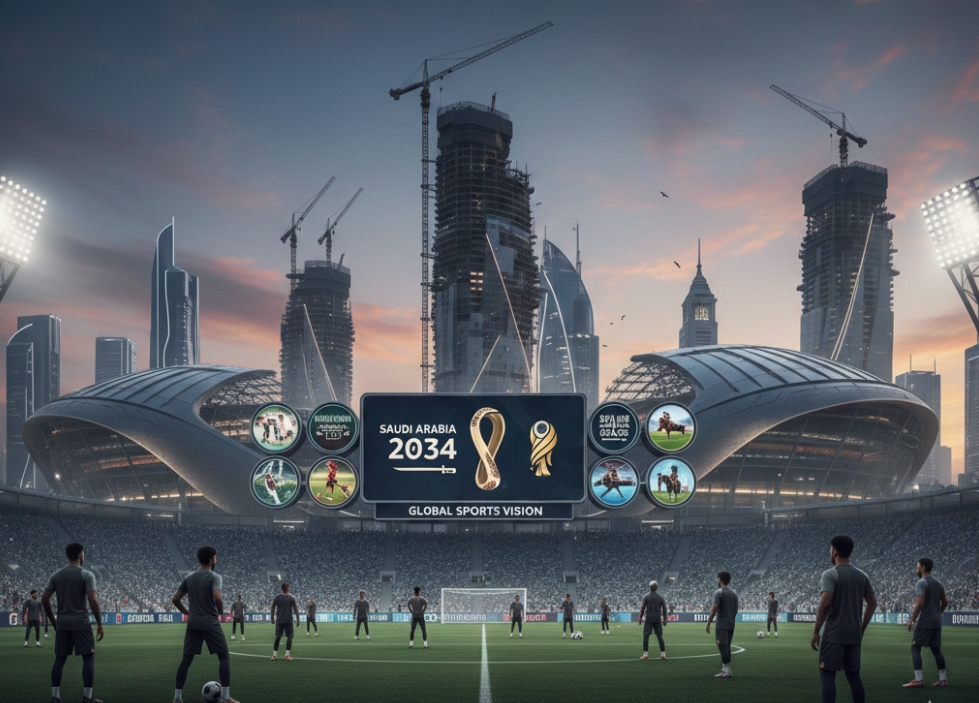
Riyadh, Today — As Saudi Arabia advances toward hosting the 2034 FIFA World Cup, preparations across infrastructure, event planning, and sports development continue to gather pace, reflecting the Kingdom’s long-term ambition to establish itself as a global hub for elite sporting events.
Saudi Arabia’s successful World Cup bid achieved the highest technical evaluation score ever awarded by FIFA, highlighting strong confidence in the country’s organizational capacity, infrastructure plans, and delivery model. The bid was widely praised for its clarity, scale, and alignment with international football standards.
🏟 Stadium Development at the Core of the Strategy
A cornerstone of the preparations is the development of a nationwide network of 15 world-class stadiums spread across key cities including Riyadh, Jeddah, Al Khobar, Abha, Qiddiya, and NEOM. The plan combines newly built venues with redeveloped stadiums designed to serve long-term community, sporting, and entertainment needs beyond the tournament.
Among the flagship projects:King Salman International Stadium (Riyadh), planned as the tournament’s main venue, is expected to seat approximately 92,000 spectators and host the opening match and final.Aramco Stadium (Al Khobar) is designed as a multi-use venue with a post-World Cup focus on domestic football and community sport.
Prince Mohammed bin Salman Stadium (Qiddiya) is planned as a landmark destination combining elite football with entertainment and tourism infrastructure.
Additional modern stadiums in Riyadh and Jeddah are being designed with advanced cooling systems, hospitality zones, and fan-focused technology.
The projects form part of a broader urban development strategy aimed at improving accessibility, public transport, and fan experience.
⛅ Managing Scale, Cost, and Timelines
Recent reporting has highlighted the complex logistical and financial challenges involved in delivering infrastructure on this scale. Adjustments to timelines and construction phases have been discussed as part of wider efforts to optimize costs and ensure sustainability.
Saudi authorities have emphasized that such reviews are a normal part of large-scale global projects and do not signal a reduction in ambition. Public-private partnerships are playing an increasing role in maintaining momentum while ensuring long-term economic value.
🌍 Beyond Football: Building a Sports Economy
While the World Cup remains a central focus, Saudi Arabia’s sports strategy extends well beyond football. The Kingdom continues to host and invest in a wide range of international events across motorsport, combat sports, golf, tennis, esports, and athletics.
This diversified approach is designed to strengthen sports tourism, expand the hospitality sector, and create year-round engagement for international visitors. Analysts expect these initiatives to generate lasting economic impact while elevating Saudi Arabia’s global sporting profile.
🏆 Vision 2030 and Long-Term
LegacyThe 2034 World Cup preparations are closely aligned with Saudi Vision 2030, the national strategy aimed at economic diversification, cultural development, and global integration. Sports infrastructure is viewed not only as a platform for elite competition, but also as a catalyst for youth participation, health initiatives, and international collaboration.
Saudi sports officials have repeatedly stated that the objective is not only to host a successful World Cup, but to leave a lasting legacy of modern facilities, skilled professionals, and a strengthened domestic sports ecosystem.
As the countdown to 2034 continues, Saudi Arabia’s preparations reflect a careful balance between ambition and execution. The coming years will be decisive in translating planning and construction into a landmark sporting event with global significance.